Posted by defensebaseactcomp on October 26, 2008
Welcome to the Defense Base Act
$$$$ We are the Best Kept Secret of the Wars $$$$
and how should the taxpayer feel about them hiring “Reputation Management” Firms to cover up their cover ups?
Contact us at dbacasualty@yahoo.com
All comments made here are solely the opinion of the person commenting and not necessarily the opinion of this blog.
Posted in ACE, AIG and CNA, Civilian Contractors, Contractor Casualties and Missing, Defense Base Act, Defense Base Act Attorneys, Defense Base Act Insurance, Defense Base Act Law and Procedure, Defense Base Act Lawyers, Department of Labor, Dropping the DBA Ball, Injured Contractors, LHWCA Longshore Harbor Workers Compesnation Act, OALJ, War Hazards Act | Tagged: ACE, AIG, bad faith insurance, Chartis, Civilian Contractor, Civilian Contractor Casualties, CNA, Contractor Casualties, DBA Lawyers, Defense Base Act, Defense Base Act Attorneys, Defense Base Act Class Action, Defense Base Act Workers Compensation, Department of Labor, ISIS, LHWCA, OALJ, War Hazards Act | 10 Comments »
Posted by defensebaseactcomp on November 27, 2012
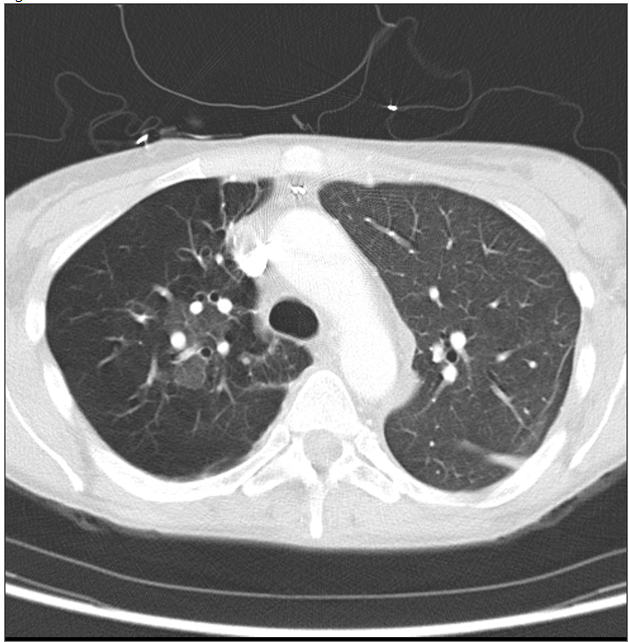
Due to the large number of contractors contacting us about Lung problems after working in Iraq and Afghanistan we’ll be investigating and posting all information we can find on this topic. Please forward any information you may have to dbacasualty@yahoo.com.
Channel 4 News from August 2011
 US soldiers returning from Iraq and Afghanistan with an apparently untreatable and incurable lung disease are being dismissed as out of shape because tests appear normal, writes Sarah Jones.
A civilian physician who has diagnosed more than 50 soldiers with constrictive bronchiolitis says the life-altering disease is linked to service in Iraq and Afghanistan.
Dr Robert Miller, of Vanderbilt University, says: “This scarring of the small airways in the lungs is common in people who have had bone marrow transplants or lung transplant rejection not people who have passed military fitness exams.
I get shortness of breath and painful burning in my lungs after running just a quarter of a mile, I can’t run any more Dr Sylvia Waters
“What we can say is that this disorder is linked to service in the Middle East. But we haven’t been able to definitively link what the cause is for the black lacy pigment. It’s something that’s inhaled that shouldn’t be there.”
Last month the New England Journal of Medicine published a study by Dr Miller and colleagues which documented the condition of soldiers who had served in Iraq and Afghanistan and were diagnosed with constrictive bronchiolitis.
However, their analysis doesn’t reveal how common the condition is in troops or positively identify the cause of constrictive bronchiolitis in troops.
‘Black lacy pigmentation’
The diagnoses were made after lung biopsies. At least half the soldiers have left the service with a disability rating making them eligible to receive anywhere between $123 to over $3,100 per month depending on the level of their disability and number of dependents.
In certain instances the Department of Veterans Affairs recognises a link between the disorder and service. But compensation is based on pulmonary function testing (PFT) and soldiers with constrictive bronchiolitis have normal PFT results despite having scarring of the airways, black lacy pigment in their lungs and severe exercise limitations.
A further complication is that deployed troops do not receive pre- and post-deployment pulmonary function tests that could help doctors know the extent of lung damage.
Dr Sylvia Waters serves in the US army and is a practicing anaesthetist. She used to run every day but after serving in Iraq she had to give up her passion.
“After a six-month tour in Mosul, Iraq I get shortness of breath and an excruciating burning in my lungs after running just a quarter of a mile. I can’t run any more.”
Army physicians tried routine tests including X-rays, pulmonary function tests and chest CT scans. They tried inhalers and steroid treatments but nothing worked and all tests results kept coming back normal.
At times, Dr Waters says she doubted herself: “I felt like I was going crazy because all these physicians kept telling me everything was coming back negative.
“It was only the fact that I was a physician and I knew other doctors that I even got diagnosed because I don’t know how else I would have done it.”
Please read the entire story here
Posted in Afghanistan, Burn Pits, Cancer, Civilian Contractors, Defense Base Act, Iraq, Toxic Exposures, Veterans | Tagged: Afghanistan, Black lacy Pigmentation, Bronchiolitis, Burn Pits, Constrictive Bronchiolitis, Defense Base Act, Iraq, Lung Diseases, Lung Problems, Toxic | 1 Comment »
Posted by defensebaseactcomp on November 11, 2012
Thank you to all who served
With a special thank you to those who served again

and were sold out to
AIG, CNA, and ACE
by the US Government
Posted in Civilian Contractors, Contractor Casualties and Missing, Defense Base Act, Defense Base Act Insurance, Delay, Deny, Department of Labor, Dropping the DBA Ball, Hope that I die, LHWCA Longshore Harbor Workers Compesnation Act, Political Watch, Racketeering, Veterans | Tagged: ACE, AIG, Civilian Contractors, Civilian Veterans, CNA, Contractor Casualties, DBA, DBA Insurance, Defense Base Act, Veterans, Veterans Day, Veterans Day 2012 | 1 Comment »
Posted by defensebaseactcomp on November 4, 2012
–
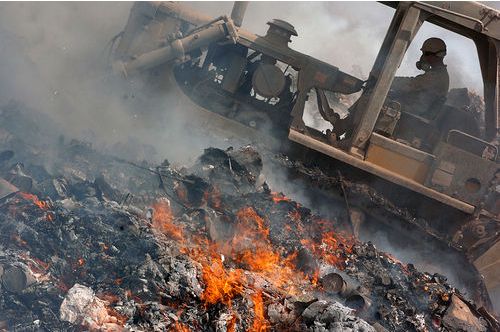
Breathing dust, fumes and other and other toxic substances, exposed troops deployed overseas, and those who worked for government contractors abroad and other civilians, to a serious hazards. Some of the chemicals were very toxic carcinogens and are deadly.
At US Senate hearings it was revealed that the toxic carcinogen, Sodium Dichromate (CAS 10588-01-9), was spread across a ruined water-injection facility in Qarmat Ali, Iraq, when the soldiers were there in the spring and summer of 2003. Thousands of individuals may have been exposed.
A simple evaluation may assist in assessing your exposure and disease which includes: a history which characterized the exposure and preexisting medical conditions of each individual exposed; a physical exam that identified any findings potentially related to a chromium exposure, and medical tests including blood, urine, chest X-ray, and a breathing test (called a pulmonary function test).
An exposure to this chemical may produce:
- Chronic health effects
- Lung and throat cancer
- Blisters and deep ulcers
- Damage to the septum
- Skin allergy
- Asthma-like allergy
- Kidney damage.
As a supporter for the improved health and welfare of individuals against hazardous occupational and environmental exposures, Jon L. Gelman advocates for changes in safety standards and safer use of chemicals. If you have been exposed to burn pit dust, smoke or fumes or Sodium Dichromate, contact Jon Gelman via e-mail or call +1 973-696-7900.
Please see the list of known Burn Pit locations here
Posted in Burn Pits, Cancer, Civilian Contractors, Defense Base Act, Defense Base Act Attorneys, Defense Base Act Insurance, Defense Base Act Lawyers, Department of Labor, Iraq, KBR, LHWCA Longshore Harbor Workers Compesnation Act, Toxic Exposures, Veterans | Tagged: Burn Pits, Burn Pits Claims, Defense Base Act, Hexavalent chromium, Jon Gelman, Qarmat Ali, Sodium Dichromate, Toxic Carcinogens | 1 Comment »
Posted by defensebaseactcomp on November 2, 2012
Oregon Live November 2, 1012
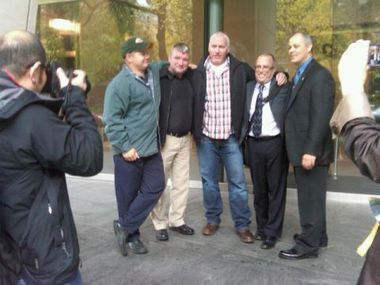
A Portland jury found defense contractor KBR Inc. was negligent, but did not commit fraud against a dozen Oregon Army National Guard soldiers who sued the company for its conduct in Iraq nine years ago. Magistrate Judge Paul Papak announced the decision about 3:35 p.m. the U.S. Courthouse in Portland. Each soldier was awarded $850,000 in non-economic damages and $6.25 million in punitive damages.
“It’s a little bit of justice,” said Guard veteran Jason Arnold, moments after the verdict was announced Friday afternoon. Arnold was one of four of the soldier-plaintiffs in the courtroom was the verdict was read.
The verdict should send an important message to those who rely on military troops, he said.
“We’re not disposable,” said another soldier, Aaron St. Clair. “People are not going to make money from our blood.”
KBR’s lead attorney, Geoffrey Harrison, said the company will appeal.
“We will appeal the jury’s incorrect verdict,” he said. “We believe the trial court should have dismissed the case before the trial.”
Harrison said the soldiers’ lawyers produced a medical expert, Dr. Arch Carson, who offered “unsupported, untested medical opinions” that each soldier had suffered invisible, cellular-level injuries as a result of their exposure to hexavalent chromium.
The verdict means the jury did not hear clear and convincing evidence that KBR intended to deceive the soldiers in the way it operated at the Qarmat Ali water treatment plant, near Basra, Iraq. But they did find that the company failed to meet its obligations in managing the work at the plant.
Friday’s verdict closes the first phase of a web of litigation between National Guard and British troops against KBR Inc., the defense contractor they accuse of knowingly exposing them in 2003 to a carcinogen at Qarmat Ali. KBR has denied the accusations.
In Oregon another set of Oregon soldiers are waiting in the wings for their day in court. Magistrate Judge Paul Papak and the attorneys agreed earlier to hold an initial trial with the first 12 soldiers, in order to keep the proceedings from becoming too unwieldy. A second trial, featuring all or some of the remaining 21 plaintiffs, could begin in federal court in Portland this winter.
Another lawsuit brought by Indiana soldiers against KBR is on hold in federal court in Texas, while an appeals court considers a jurisdictional issue.
The cases stem from the chaotic aftermath of the U.S.-led invasion of Iraq in March 2003. The Army Corps of Engineers hired KBR Inc. to run a massive program called Restore Iraqi Oil. The program involved dozens of sites throughout Iraq — sites that neither the Army nor KBR had visited before the invasion. The project was intended to quickly restore the flow of Iraq’s oil, partly to fund the war. The Pentagon remembered the way Saddam Hussein had lit the fields on fire during the first Gulf War, and feared a repeat in 2003.
Qarmat Ali was a compound where water was pumped underground to drive oil to the surface elsewhere. For decades, Iraqis had treated the water with sodium dichromate, an anticorrosion agent that contains hexavalent chromium, a known carcinogen. (Sodium dichromate is banned in the United States.)
Iraq’s Southern Oil Co. took delivery of sodium dichromate, an orange-yellow crystalline powder, in bags that were stored on site. Soldiers and others testified that the material was loose and drifting around the site, and had contaminated areas even outside the chemical injection building where it was added to the water.
How contaminated was it? Accounts differ. Even one of the plaintiffs in this case said he didn’t notice any soil discoloration. One of the British soldiers whose testimony was prerecorded said it was everywhere. Another Oregon soldier said it settled heavily on the clothing of the soldiers, who unwittingly carried it back to their camps over the border in Kuwait.
Much of KBR’s defense in the first Oregon trial focused on just how unlikely it was that any soldier — who visited the plant at durations from one day to 21 days — could have been exposed to dangerously high levels of sodium dichromate. But one of the most gripping portions of the testimony was when Oregon veteran Larry Roberta described eating a chicken patty that had been coated with the orange crystals, which he said immediately burned in his esophagus, causing him to vomit.
Roberta now is confined to a wheelchair and takes oxygen from a tank in his backpack. He had a history of gastrointestinal issues, but attributes much of his poor health to his time at Qarmat Ali.
Harrison, KBR’s lawyer, said the company “believes in the judicial process and respects the efforts and time of the jurors,” but believes the process that brought the case to conclusion Friday shouldn’t have been allowed to come so far.
“KBR did safe and exceptional work in Iraq under difficult circumstances,” he said in a brief, prepared statement. “We believe the facts and law ultimately will provide vindication.”
Soldier-plaintiff Arnold said the message of the verdict is unmistakable. He said service members are being exploited “to this day.”
Now, he said, “the voice will be out. There will be a lot more scrutiny.”
Posted in ACE, AIG and CNA, AWOL Medical Records, Cancer, Chartis, Civilian Contractors, Contractor Casualties and Missing, Defense Base Act, Exclusive Remedy, Follow the Money, Iraq, KBR, Toxic Exposures, War Hazards Act | Tagged: Halliburton, Hexavalent chromium, KBR, KBR Negligent, Oregon Army National Guard, Qarmat Ali, Sodium Dichromate, Toxic, US Army Corps of Engineers, USACE | Leave a Comment »
Posted by defensebaseactcomp on November 2, 2012
How do AIG and CNA get away with telling so many lies and paying for so little ?
They get help from those put in place to “ensure that workers’ compensation benefits are provided promptly and properly”
 The Department of Labor’s Jacksonville Florida District Office Director Charles D Lee, formerly of Liberty Mutual, gave his seal of approval to CNA’s lies by refusing to find them in default of an order that he signed himself. It took seven years to get this order.
If Mr. Lee does not remember signing this order over two years ago he should. While he signed the order for medical and indemnity probably without reading it, slapped a form cover letter to it, he did not bother to determine the amount of back indemnity and interest owed which allowed CNA to not pay on time and escape the 20% per day penalty. So few penalties apply and so little enforcement of those that do.
It took many telephone calls and finally assistance from Michael Niss, the Director, Division of Longshore and Harbor Workers’ Compensation Office of Workers’ Compensation Programs at the time, to encourage him to do his job. He was not going to do it just because an injured contractor had not received his check and was trying to find out why.
The failure on the District Director’s part to find CNA in 18 a Default occurred despite having in his possession legitimate proof, letters from Doctors stating that they had never been approved and had in fact been denied payment.
Proof of CNA lies to the new Claims Examiner, who comes to us from KBR with a KBR attitude, are ignored by everyone in the DoL from herself, Charles D Lee, Kristina Hall, to Eric Richardson, Miranda Chui, to the DOL IG.
CNA never produced a receipt for paying back years of Medical Care that they were responsible for and refused to provide but Charles D Lee determined that they did so based on their attorney saying that they did.
CNA paid for a small fraction of the past medical care, finally, 16 months after the order was signed. While this is clearly a 16 month default during which time the claimant has this debt hanging over his head despite having an Order in place, CNA is not held responsible. A receipt has never been produced. Charles D Lee takes them at their word while their lies are in his hands.
No dollar value is applied to the damages caused by a refusal to provide medical care for years on end and so there is no penalty or recovery.
We talk with contractors everyday who have orders in place for medical that never receive it.
The lengthy efforts your attorney must go through to try, not necessarily succeed, to secure the medical care is considered to be “Janitorial” work by CNA that they should not have to pay for.
Why not continue with the Deadly Paper Games when it saves you so much money and the very people that are supposed to be looking out for the claimant condone these criminal actions?
No dollar value is applied to the temporary injuries which become permanent at the hands of CNA.
The hands of CNA, their claims examiners, and their attorneys are so gently stroked by the Departments of Labor’s Jacksonville District Office.
The Blood is on all of their hands.
Posted in AIG and CNA, Civilian Contractors, Contractor Casualties and Missing, Defense Base Act, Defense Base Act Insurance, Defense Base Act Law and Procedure, Department of Labor, Dropping the DBA Ball, Follow the Money, Hope that I die, Injured Contractors, Interviews with Injured War Zone Contractors, Iraq, LHWCA Longshore Harbor Workers Compesnation Act, Liberty Mutual, Misjudgements, OALJ, Political Watch, PTSD and TBI, Racketeering, Veterans, War Hazards Act | Tagged: CNA, CNA Insurance Company, CNA lies, DBA Claimants, Deadly Paper Games, Deny Medical Care, Department of Labor, Department of Labor Jacksonville District Office, DoL, KBR, LHWCA, Liberty Mutual, Longshore Harbor Workers Compensation Act, Medical Care, Request for Default | 2 Comments »
Posted by defensebaseactcomp on October 27, 2012

Thanks to Danger Zone Jobs for this Post
This update reports DoD contractor personnel numbers in theater and outlines DoD efforts to improve management of contractors accompanying U.S. forces. It covers DoD contractor personnel deployed in Afghanistan (Operation Enduring Freedom (OEF), Iraq, and the U.S. Central Command (USCENTCOM) area of responsibility (AOR).
In 4th quarter FY 2012, USCENTCOM reported approximately 137,000 contractor personnel working for the DoD in the USCENTCOM AOR. This total reflects no change from the previous quarter. The number of contractors outside of Afghanistan and Iraq make up about 13.7% of the total contractor population in the USCENTCOM AOR. A breakdown of DoD contractor personnel is provided below:
A breakdown of DoD contractor personnel is provided below:
DoD Contractor Personnel in the USCENTCOM AOR
|
Total Contractors |
U.S. Citizens |
Third Country Nationals |
Local & Host Country Nationals |
| Afghanistan Only |
109, 564 |
31,814 |
39,480 |
38,270 |
| Iraq Only* |
9,000 |
2,314 |
4,621 |
2,065 |
| Other USCENTCOM Locations |
18,843 |
8,764 |
9,297 |
782 |
| USCENTCOM AOR |
137,407 |
42,892 |
53,398 |
41,117 |
*Includes DoD contractors supporting U.S. Mission Iraq and/or Office of Security Cooperation-Iraq
Afghanistan Summary
The distribution of contractors in Afghanistan by contracting activity are:
| Theater Support – Afghanistan: |
16,973 |
(15%) |
| LOGCAP: |
40,551 |
(37%) |
| U.S. Army Corps of Engineers: |
7,647 |
(7%) |
| Other:* |
44,393 |
(41%) |
| Total: |
113,736 |
|
| *Includes Defense Logistics Agency, Army Materiel Command, Air Force External and Systems Support contracts, Special Operations Command and INSCOM. |
OEF Contractor Posture Highlights:
There are currently approximately 109.5K DoD contractors in Afghanistan. The overall contractor footprint has decreased 3.7% from the 3rd quarter FY12.
The contractor to military ratio in Afghanistan is 1.13 to 1 (based on 84.2K military).
Local Nationals make up 34.9% of the DoD contracted workforce in Afghanistan.
Iraq Summary
Contractor Posture Highlights:
The total number of contractors supporting the U.S. Government in Iraq (DoD+DoS) is now approximately 13.5K, which meets the USG goal of reducing the contractor population at the end of FY 2012.
The Department of Defense and Department of State continue to refine the requirements for contract support. Some contractor personnel employed under DoD contracts are supporting State Department and other civilian activities under the Chief of Mission, Iraq. These DoD contractors are provided on a reimbursable basis.
General Data on DoD Private Security Contractor Personnel in Iraq and Afghanistan
USCENTCOM reports, as of 4th quarter FY 2012, the following distribution of private security contractors in Afghanistan and Iraq:
|
Total* |
U.S. Citizens |
Third Country National |
Local & Host Country National |
| DoD PSCs in Afghanistan |
18,914 |
2,014 |
1,437 |
15,413 |
| DoD PSCs in Iraq |
2,116 |
102 |
1,873 |
191 |
*These numbers include most subcontractors and service contractors hired by prime contractors under DoD contracts. They include both armed and unarmed contractors. They do not include PSCs working under DoS and USAID contracts.
Posted in Afghanistan, Civilian Contractors, Department of Defense, Iraq | Tagged: Afghanistan, Civilian Contractor Count, Civilian Contractors, Department of Defense, DoD, Fourth Quarter 2012, Iraq, Overseas Contractor Count, Private Military Contractors, Private Security Contractors, USCENTCOM AOR | Leave a Comment »
Posted by defensebaseactcomp on October 25, 2012
October 25, 2012
Voluntary Today, Involuntary Tomorrow
Another Successful Flush by Wackenhut G4S

Will the last Ronco Consulting Corporation Employee out please close the lid ?
Posted in Afghanistan, Armorgroup, Civilian Contractors, Exclusive Remedy, Follow the Money, G4S, Iraq, Ronco Consulting, State Department, Taxes, Wackenut | Tagged: Armorgroup, Demining, G4S, injured war zone contractors, Landmines, Riff, Riffing, Ronco, Ronco Consulting, Ronco Consulting Corporation, State Department, Wackenhut | Leave a Comment »
Posted by defensebaseactcomp on October 19, 2012
Accused Saco gunman had raised red flags
The man’s wife had gotten a protection order and police saw disturbing signs before Tuesday’s standoff.
Perhaps AIG and their claims adjusters, and their attorneys should be arrested for this
Portland Press Herald
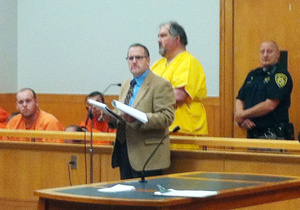 BIDDEFORD — The wife of a Saco man accused of shooting at her and her mother and burning a house down Tuesday had secured a protection-from-abuse order against him on Monday.
Donald A. Henson, 47, was arrested Tuesday night after a three-hour standoff with police at his mother-in-law’s house at 645 Goodwin Mills Road in Dayton. He is charged with aggravated attempted murder, arson and terrorizing.
Police say he shot at his wife and mother-in-law and set two houses and a pickup truck on fire.
Henson made his initial court appearance Wednesday in Biddeford District Court. Justice Paul Fritzsche did not ask him to enter a plea. Henson was being held in the York County Jail on $250,000 cash bail.
Prosecutors had requested $100,000 bail. Fritzsche said he raised it because of Henson’s “incredibly dangerous behavior.”
Henson did not speak during his arraignment. B.J. Broder, the lawyer representing him, said Henson has post-traumatic stress disorder and is disabled.
Broder said Henson was injured in Iraq in 2009 while working as a civilian contractor and it appears that he doesn’t understand his rights because of his mental state.
In an email sent Tuesday morning to Biddeford District Court, a Saco Police Department representative said officers were concerned about Henson’s potential for “homicidal/suicidal” actions
Please read the entire story here
Posted in AIG and CNA, Civilian Contractors, Contractor Casualties and Missing, Defense Base Act, Defense Base Act Attorneys, Defense Base Act Insurance, Delay, Deny, Department of Labor, Dropping the DBA Ball, Hope that I die, Injured Contractors, Iraq, Melt Down, PTSD and TBI | Tagged: AIG, Arson, Attempted Murder, BJ Broder, Civilian Contractor, Defense Base Act, Defense Base Act Insurance, Disabled Contractor, Donald A Henson, injured contractor, Post Traumatic Stress Disorder, ptsd, terrorizing | 2 Comments »
Posted by defensebaseactcomp on October 12, 2012
 Khaama Press October 12, 2012
According to reports two foreign nationals were abducted by unknown gunmen in central Maidan Wardak province of Afghanistan.
A local security official speaking on the condition of anonymity said the two individuals were kidnapped in Syedabad district.
The source further added the two individuals including a Canadian Man and an American woman were civilians.
They were kidnapped while they were on their way from eastern Ghazni province to capital Kabul.
No group including the Taliban militants has so far claimed responsibility behind the incident.
Afghan government officials yet to comment regarding the report.
Please see the original and read more here
Posted in Afghanistan, Civilian Contractors, Contractor Casualties and Missing, Contractors Kidnapped | Tagged: Afghanistan, American Abducted, American MIssing, Canadian Abducted, Canadian Missing, Civilian Contractors, Contractors Abducted, Contractors Missing, Syedabad, Wardak | Leave a Comment »
Posted by defensebaseactcomp on October 9, 2012
Unarmored trucks carrying needed supplies were ambushed, leaving six drivers dead. Records illuminate the fateful decision.
“Can anyone explain to me why we put civilians in the middle of known ambush sites?”
“Maybe we should put body bags on the packing list for our drivers.”
T Christian Miller The LA Times September 3, 2007
Senior managers for defense contractor KBR overruled calls to halt supply operations in Iraq in the spring of 2004, ordering unarmored trucks into an active combat zone where six civilian drivers died in an ambush, according to newly available documents.
Company e-mails and other internal communications reveal that before KBR dispatched the convoy, a chorus of security advisors predicted an increase in roadside bombings and attacks on Iraq’s highways. They recommended suspension of convoys.
“[I] think we will get people injured or killed tomorrow,” warned KBR regional security chief George Seagle, citing “tons of intel.” But in an e-mail sent a day before the convoy was dispatched, he also acknowledged: “Big politics and contract issues involved.”
KBR was under intense pressure from the military to deliver on its multibillion-dollar contract to transport food, fuel and other vital supplies to U.S. soldiers. At Baghdad’s airport, a shortage of jet fuel threatened to ground some units.
After consulting with military commanders, KBR’s top managers decided to keep the convoys rolling. “If the [Army] pushes, then we push, too,” wrote an aide to Craig Peterson, KBR’s top official in Iraq.
The decision prompted a raging internal debate that is detailed in private KBR documents, some under court seal, that were reviewed by The Times.
One KBR management official threatened to resign when superiors ordered truckers to continue driving. “I cannot consciously sit back and allow unarmed civilians to get picked apart,” wrote Keith Richard, chief of the trucking operation.
Six American truck drivers and two U.S. soldiers were killed when the convoy rumbled into a five-mile gauntlet of weapons fire on April 9, 2004, making an emergency delivery of jet fuel to the airport. One soldier and a seventh trucker remain missing.
Recriminations began the same day.
“Can anyone explain to me why we put civilians in the middle of known ambush sites?” demanded one security advisor in an e-mail. “Maybe we should put body bags on the packing list for our drivers.”
Please read the entire story here
Posted in Civilian Contractors, Contractor Casualties and Missing, Contractors Kidnapped, Defense Base Act, Defense Base Act Insurance, Department of Defense, Exclusive Remedy, Follow the Money, Injured Contractors, Iraq, KBR, Misjudgements, Political Watch, T Christian Miller | Tagged: Big Contracts, Big Politics, Body Bags, Civilian Contractors, Contractor Casualties, Convoy Ambushes, Defense Base Act, Exclusive Remedy, Halliburton, KBR, KBR's Top Managers, License to Kill, T Christian Miller, T Miller | Leave a Comment »
Posted by defensebaseactcomp on October 9, 2012
There are more contractors than troops in Afghanistan
Time’s Battleland October 9, 2012 by David Isenberg
U.S. military forces may be out of Iraq, but the unsung and unrecognized part of America’s modern military establishment is still serving and sacrificing — the role played by private military and security contractors.
That their work is dangerous can be seen by looking at the headlines. Just last Thursday a car bomb hit a private security convoy in Baghdad, killing four people and wounding at least nine others.
That is hardly an isolated incident. According to the most recent Department of Labor statistics there were at least 121 civilian contractor deaths filed on in the third quarter of 2012. Of course, these included countries besides Iraq.
As the Defense Base Act Compensation blog notes, “these numbers are not an accurate accounting of Contractor Casualties as many injuries and deaths are not reported as Defense Base Act Claims. Also, many of these injuries will become deaths due to the Defense Base Act Insurance Companies denial of medical benefits.” To date, a total of 90,680 claims have been filed since September 1, 2001.
How many contractors are now serving on behalf of the U.S. government?
According to the most recent quarterly contractor census report issued by the U.S. Central Command, which includes both Iraq and Afghanistan, as well as 18 other countries stretching from Egypt to Kazakhstan, there were approximately 137,000 contractors working for the Pentagon in its region. There were 113,376 in Afghanistan and 7,336 in Iraq. Of that total, 40,110 were U.S. citizens, 50,560 were local hires, and 46,231 were from neither the U.S. not the country in which they were working.
Put simply, there are more contractors than U.S. troops in Afghanistan.
These numbers, however, do not reflect the totality of contractors. For example, they do not include contractors working for the U.S. State Department. The CENTCOM report says that “of FY 2012, the USG contractor population in Iraq will be approximately 13.5K. Roughly half of these contractors are employed under Department of State contracts.”
While most of the public now understands that contractors perform a lot of missions once done by troops – peeling potatoes, pulling security — they may not realize just how dependent on them the Pentagon has become.
Please read the entire post here
Posted in Afghanistan, Civilian Contractors, Contractor Casualties and Missing, Defense Base Act, Department of Defense, Iraq, KBR, State Department | Tagged: Afghanistan, Civilian Contractor, Civilian Contractors, Contractor Casualties, Contractor Casualty Count, David Isenberg, DBA, Defense Base Act, Iraq, Private Military Contractors, Private Security Contractors, troops in afghanistan | Leave a Comment »
Posted by defensebaseactcomp on October 2, 2012
WE ARE THE BEST KEPT SECRET OF THE WARS
According to the Department of Labor’s Defense Base Act Claim Summary Reports there were at least 121 Civilian Contractor Deaths filed on in the third quarter of 2012.
Keep in mind that these numbers are not an accurate accounting of Contractor Casualties as many injuries and deaths are not reported as Defense Base Act Claims. Also, many of these injuries will become deaths due to the Defense Base Act Insurance Companies denial of medical benefits.
Many foreign national and local national contractors and their families are never told that they are covered under the Defense Base Act and so not included in the count.
At least 18 death claims were filed for Iraq
At Least 90 death claims were filed for Afghanistan
At least 3,195 Defense Base Act Claims were filed during this quarter
At least 121 were death claims
At least 1,138 were for injuries requiring longer than 4 days off work
At least 85 were for injuries requiring less than 4 days off work
At least 1,879 were for injuries requiring no time off of work
A total of 90,680 Defense Base Act Claims have been filed since September 1, 2001
Posted in Afghanistan, Civilian Contractors, Contractor Casualties and Missing, Defense Base Act, Department of Labor, Iraq | Tagged: 121 Contractor Deaths, Civilian Contractor, Civilian Contractors, Contractor Casualties, Contractor Casualty, Contractors Killed, Defense Base Act, Department of Labor | 7 Comments »
Posted by defensebaseactcomp on October 1, 2012
What is not known is the impact among those who work in the armed private security sector
“There’s loads of loose cannons running around”
BBC Scotland October 1, 2012
 Former SAS soldier Bob Paxman – who served in Iraq as well as other hostile environments – is one of a growing number of former servicemen who say they have suffered with the mental health condition Post Traumatic Stress Disorder (PTSD).
After a number of years in the military, Paxman retrained as a private security contractor, on protection contracts in Africa and Iraq.
He says as a result of being constantly in a dangerous environment and witnessing colleagues being killed and maimed he was diagnosed with PTSD.
The stress disorder is thought to affect up to 20% of military personnel who have served in conflict zones, according to research published by the National Center for PTSD in the US.
What is not known is the impact among those who work in the armed private security sector, many of whom are drawn from the military.
Yet the condition, says Paxman, led to him having flashbacks and becoming violent and paranoid.
“I was a danger to the public, a danger to myself,” Paxman says.
“A danger to whoever was perceived as being the enemy.”
Please read the entire article here
Posted in Civilian Contractors, Defense Base Act, Dropping the DBA Ball, PTSD and TBI | Tagged: Civilian Contractors, Defense Base Act, Post Traumatic Stress Disorder, Private Security Contractors, ptsd | Leave a Comment »
Posted by defensebaseactcomp on October 1, 2012
HERNANDO –October 3, 2012
A 52-year-old contractor from Citrus County was one of two people killed last weekend in Afghanistan.
According to Bay News 9’s partner newspaper the Citrus County Chronicle, Kevin O’Rourke, who lived in the town of Hernando, was in Afghanistan as a civilian contractor with NATO, working for Engility, a law enforcement professional firm based in Alexandria, Va.
A former New York City police officer, O’Rourke missed being in the World Trade Center by 20 minutes on September 11, 2001. He spent hours that day helping a friend trapped in the rubble.
Friends say after 9/11, O’Rourke saw “a great need to go to (Iraq and) Afghanistan and to help the younger generation understand what we went through in New York.”
New York Post October 1, 2012
A retired NYPD sergeant working as a civilian contractor in Afghanistan was killed during an apparent “insider attack” by members of the Afghan military.
Kevin O’Rourke, 52, and an unidentified US soldier were slain Saturday in the clash with Afghan troops.
O’Rourke had been on the force for 20 years and worked as member of the NYPD’s elite Emergency Service Unit.
He was also one of the department’s scuba instructors, based at Brooklyn’s Floyd Bennett Field.
O’Rourke, originally from Long Island, retired in 2003 and later moved to Florida.
The soldier was the 2,000 service member to die in the 11-year conflict.
Three Afghan troops were also killed in the shootout at a checkpoint in the eastern part of the country.
Posted in Afghanistan, Civilian Contractors, Contractor Casualties and Missing, Defense Base Act | Tagged: Civilian Contractor, Civilian Contractors, Contractor Casualties, Contractor Casualty, Engility, Kevin O'Rourke, Killed in Afghanistan | Leave a Comment »
Posted by defensebaseactcomp on September 30, 2012
WARNINGS ABOUT KILLER OF SCOT WENT UNHEEDED October 1, 2012
ArmorGroup put the gun in his hand knowing that he was troubled

CONTROVERSIAL security firm G4S ignored warnings not to employ an armed guard in Iraq who went on to murder two of his colleagues, it has been claimed.
Danny Fitzsimons was sentenced to at least 20 years in an Iraqi prison last year for killing Scot Paul McGuigan and Australian Darren Hoare in Baghdad in 2009.The parents of Paul McGuigan, 37, have now called for G4S ArmorGroup to face criminal charges for failing to heed the warnings and sending Fitzsimons to Iraq.Now a new BBC Scotland documentary has revealed that G4S was warned not to employ Fitzsimons, who was suffering from Post-Traumatic Stress Disorder, and had been fired by a previous security contractor for punching a client.It emerged that a whistleblower sent two e-mails to the London-based company, which operates as Armorgroup in Iraq, expressing concerns that Fitzsimons’ unstable behaviour made him unsuitable to be handling weapons in a war zone.
The first e-mail, revealed in tonight’s BBC Scotland Investigates: Britain’s Private War programme, reads: “I am alarmed that he will shortly be allowed to handle a weapon and be exposed to members of the public. I am speaking out because I feel that people should not be put at risk.”And in a second e-mail, sent as 32-year-old Fitzsimons was about to start work in Baghdad, the whistleblower adds:“Having made you aware of the issues regarding the violent criminal Danny Fitzsimons, it has been noted that you have not taken my advice and still choose to employ him in a position of trust.
“I have told you that he remains a threat and you have done nothing.”Paul McGuigan’s mother, Corinne Boyd-Russell, from Innerleithen, in Peebleshire, said: “Fitzsimons fired the bullets. But the gun was put in his hand by G4S ArmorGroup.“I want G4S to be charged with corporate manslaughter and be held accountable for what they did.”The parents of Fitzsimons were also shocked to hear about the existence of the e-mails.Mother Liz Fitzsimons, from Manchester, said: “The people who we feel are responsible, who we hold responsible for putting that gun in Danny’s hand, are without a shadow of a doubt G4S.”The news comes just months after the UK Government was forced to call in 1,200 troops to police the Olympic Games venues after G4S failed to provide enough staff.
The firm recently won a £20million contract to manage the electronic tagging of Scottish offenders.
A spokesman for G4S said: “Although there was evidence that Mr Fitzsimons falsified and apparently withheld material information during the recruitment process, his screening was not completed in line with the company’s procedures.
“Our screening processes should have been better implemented in this situation, but it is a matter of speculation what, if any, role this may have played in the incident.”
Posted in Armorgroup, Civilian Contractors, Contractor Casualties and Missing, Defense Base Act, Defense Base Act Insurance, Defense Base Act Law and Procedure, Department of Labor, Exclusive Remedy, Follow the Money, G4S, Hope that I die, Iraq, Melt Down, Political Watch, PTSD and TBI, Ronco Consulting, State Department, UK Contractor killed, Wackenut | Tagged: AGNA, Armorgroup, ArmorGroup North America, Civilian Contracotor, Civilian Contractors, Contractor Casualties, Contractor Casualty, Danny Fitzsimons, Darren Hoare, Defense Base Act, Exclusive Remedy, G4S, Iraq, Paul McGuigan, Post Traumatic Stress Disorder, ptsd, Ronco, Ronco Consulting, Ronco Consulting Corporation, Vetting Employees, Whistleblower, WSI | Leave a Comment »






 Defense Base Act Compensation Blog